 Introduction
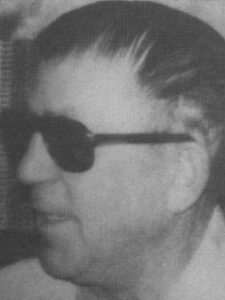
Lawrence Revere was a pit boss for 28 years as well as an author and professional Blackjack player. Born Griffith K Owens on November 5 1915, he played under several aliases, including Leonard “Speck” Parsons and Paul Mann.
Revere graduated from the University of Nebraska with a Degree in Mathematics a was known for his card counting strategies developed with Julian Braun detailed in “Playing Blackjack as a Business” The strategies included The Revere Point Counting, The Ten Count Strategy, The Revere Five Count Strategy and The Reverse Plus-Minus Strategy. He was a controversial figure as he worked both sides of the game, a casino pit boss, and a player where he advised both and his strategies still get used today.
Making The Most of his Experience
Revere is amongst the most famous names in Blackjack, and he grew up on the streets during the Great Depression hawking newspapers for two cents apiece. By the age of 13, he got involved in a life of gambling, working as a Blackjack dealer in the backroom of a barbershop. After graduating with a Masters in Math’s during World War II, he moved to Las Vegas. Revere had no trouble finding employment at a casino as a Blackjack dealer climbing the ladder to pit boss, even operating his own casino for a while.
His employers didn’t know that he was secretly batting for the other team as a professional Blackjack player and soon became a master of disguise to sustain his anonymity throughout his extensive 27-year gambling career. Lawrence Reveres 1969 publication Playing Blackjack as a Business was the first strategy guide on Blackjack written by a professional Blackjack player with insider knowledge from both sides of the fence.
Where is he now?
Sadly Lawrence Revere passed away on April 23 1977, from lung cancer and in 2005, Revere’s accomplishments got recognized with his worthy induction into the Hall of Fame.
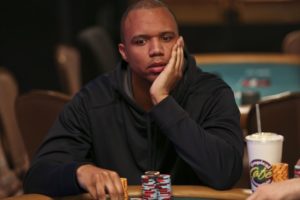 Phillip ‘Phil’ Ivey Jr. started playing poker, illegally, in Atlantic City, New Jersey as a teenager. In fact, one of his nicknames, ‘No Home Jerome’, derives from the fake identification he used to play live poker in those early days. Nevertheless, Ivey, who turned 42 in 2019, has blossomed into, arguably, the best all-round poker player in the world. He currently lies twelfth in the all-time money list, with $26.4 million in live earnings.
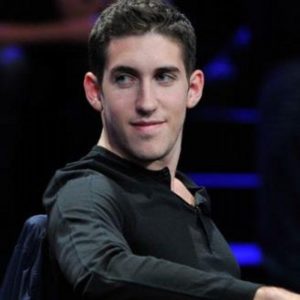 Massachusetts-born Daniel Colman currently ranks seventh on the all-time money list, with live earnings of just shy of $29 million. His position is thanks, in no small part, to the second largest payout in poker tournament history, $15,306,668, which Colman took home after winning the World Series of Poker (WSOP) ‘Big Drop for One Drop’ tournament in 2014. In fact, 2014 proved to be a seminal year for the 23-year-old Colman, who collected four titles, including the European Poker Tour (EPT) Super High Roller event in Monte Carlo and the Seminole Hard Rock Poker Open in Hollywood. Nevertheless, Colman caused controversy by flatly refusing to give interviews after Big Drop for One Drop and later calling poker ‘a harmful game’.
 The main poker event at the WSOP has traditionally gathered thousands of professional punters who wanted to get to the WSOP Main Event every year.